
Is “physiological lysis” really plasmin-mediated fibrinolysis?
A new article in Diagnostics by Smudla, Schöchl, Andreas Calatzis and colleagues asks an important question in viscoelastic testing:
Is “physiological lysis” really plasmin-mediated fibrinolysis?
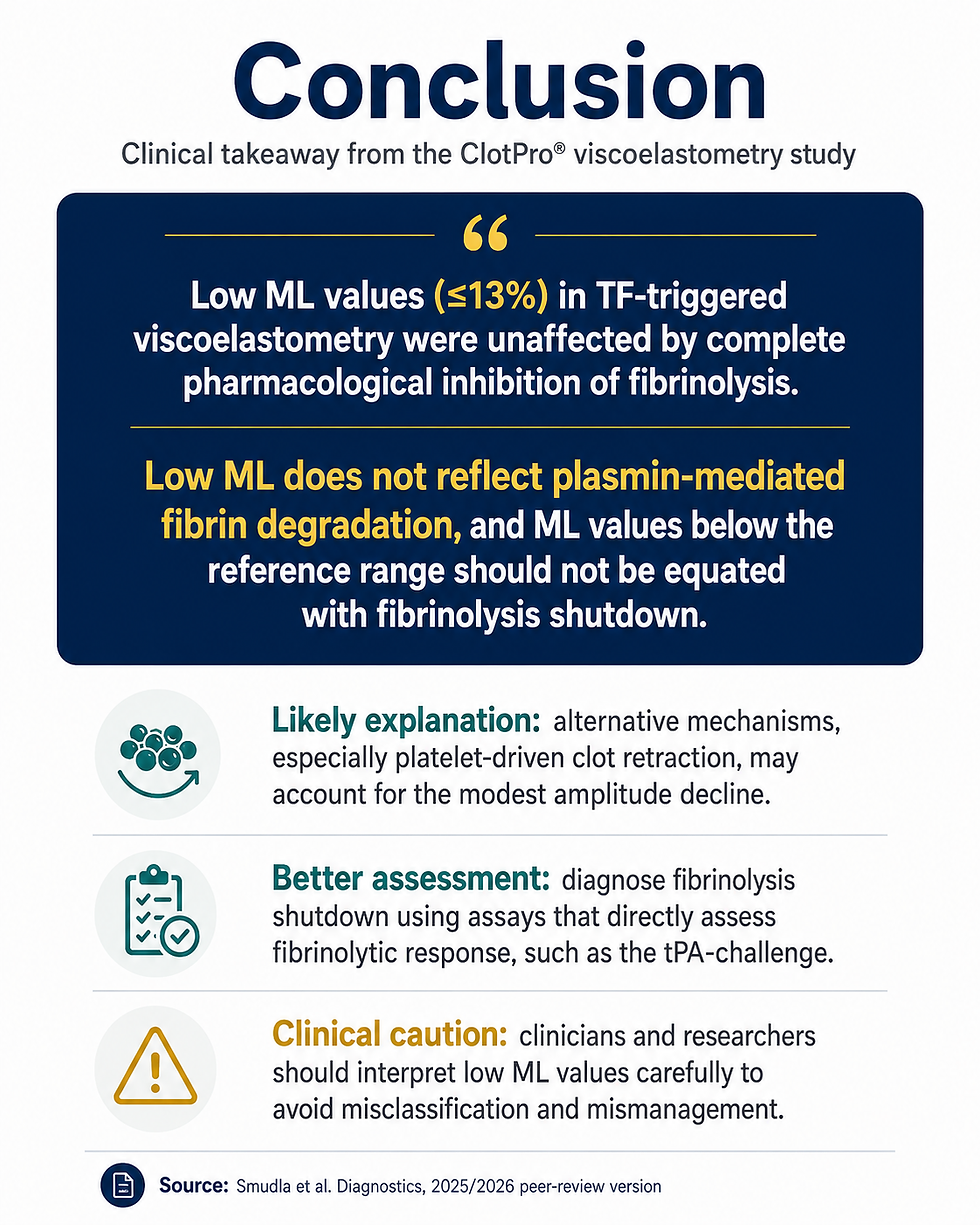
Using the ClotPro system, with APIRO Diagnostics Kft. assays and consumables, the authors compared a tissue factor-activated EX-assay with an AP-assay containing tranexamic acid to inhibit fibrinolysis in 120 healthy adults. The key finding: low maximum lysis values were essentially unchanged, even when fibrinolysis was pharmacologically inhibited.
That matters clinically.
If low ML persists despite TXA, it may not represent reduced plasmin-mediated fibrinolysis or true “fibrinolysis shutdown”. Instead, the authors suggest that modest reductions in clot firmness may reflect alternative mechanisms, particularly platelet-driven clot retraction.
For clinicians using viscoelastic testing in trauma, sepsis, surgery or critical care, this reinforces the importance of looking beyond a single ML threshold.
The authors also highlight that true fibrinolytic capacity may be better assessed using assays that directly challenge the fibrinolytic system, such as a tPA-challenge assay, rather than relying only on low ML values in tissue factor-triggered tests.
find the full article here: https://www.mdpi.com/2075-4418/16/10/1472


